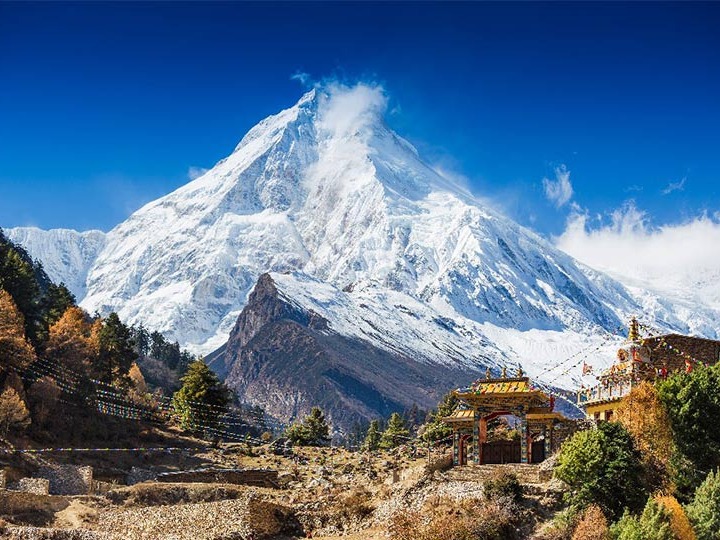
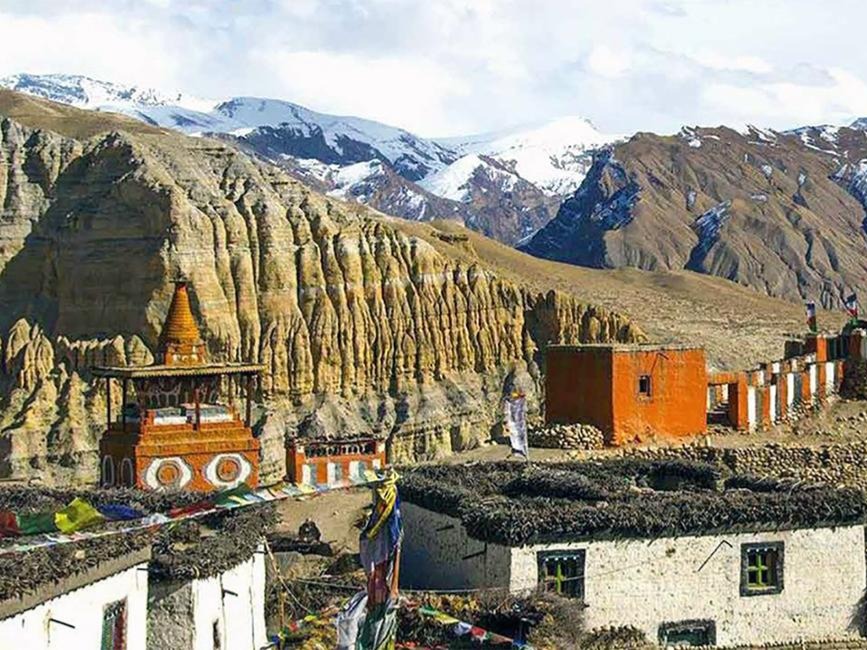
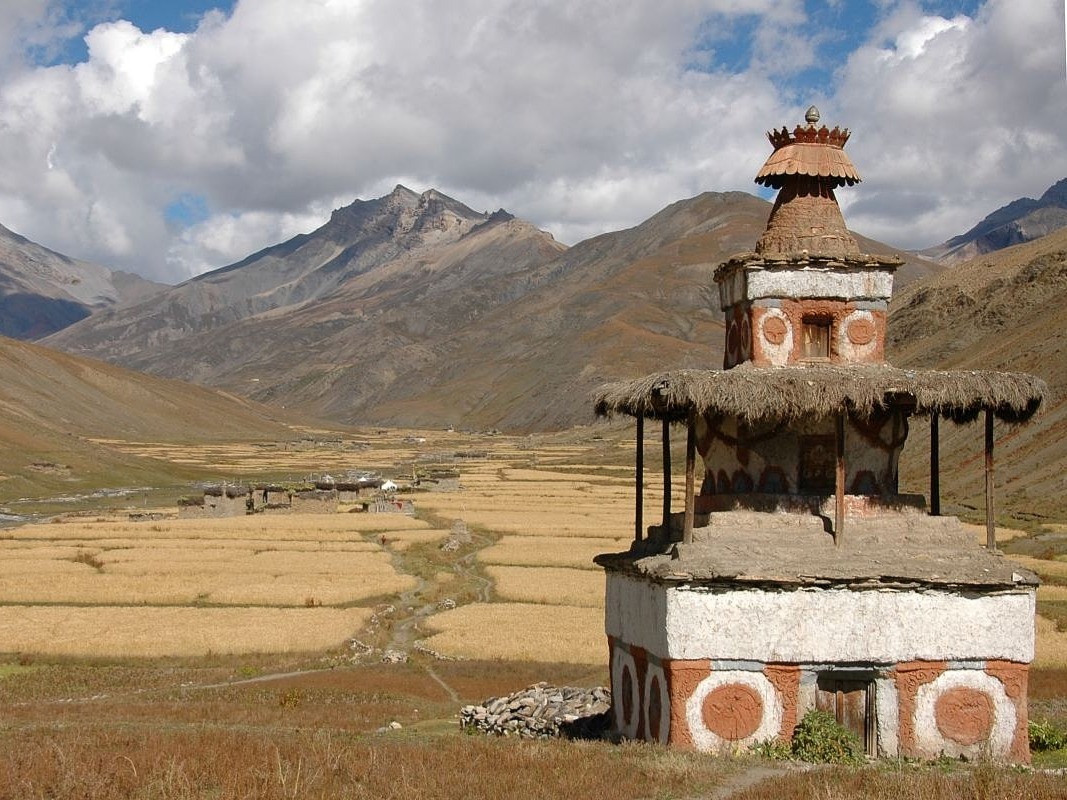
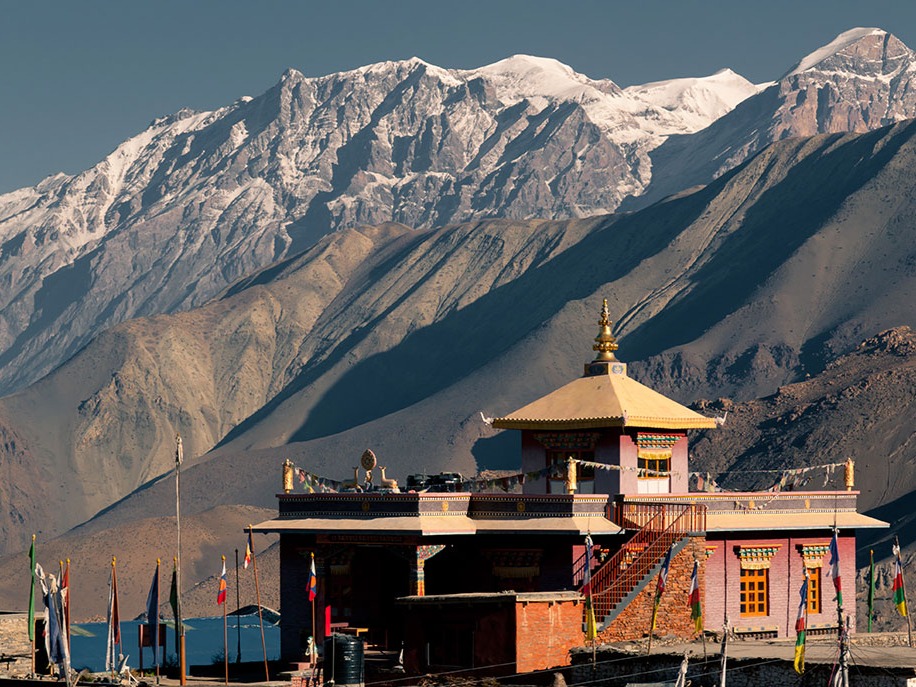
Kathmandu is not only the gateway to the Himalayas, it is also one of the world’s most fascinating centers of sacred art, Buddhist symbolism, and traditional craftsmanship. After completing a trek to Everest Base Camp, Annapurna, Langtang, Manaslu, or Upper Mustang, many travelers spend a few extra days in Kathmandu searching for something meaningful to take home. Among singing bowls, prayer flags, pashmina shawls, masks, and handmade jewelry, one item stands apart for its spiritual depth and artistic beauty, the Thangka painting.
A Thangka is more than a souvenir. It is a sacred Himalayan painting traditionally used for meditation, teaching, ritual practice, and devotion. For Buddhist practitioners, a Thangka can represent a deity, a mandala, a spiritual teaching, or the path toward enlightenment. For art lovers and cultural travelers, it is one of the finest examples of Nepal’s living heritage.
Kathmandu Valley itself is a major cultural landscape, with UNESCO recognizing seven monument zones including the Durbar Squares of Kathmandu, Patan, and Bhaktapur, along with Swayambhu, Boudhanath, Pashupati, and Changu Narayan. These sacred and artistic surroundings make the valley one of the best places in Nepal to understand and purchase authentic Himalayan art.
A Thangka, also spelled Thanka, Tangka, or Thang-ka, is a traditional Buddhist scroll painting usually created on cotton or silk. Unlike ordinary decorative paintings, a genuine Thangka follows strict religious, artistic, and geometric rules. The proportions of the Buddha’s body, the placement of deities, the shape of the eyes, the lotus seat, the hand gestures, and the mandala structure must follow established iconographic systems.
Traditionally, Thangkas were made to be rolled, carried, displayed, and used by monks, teachers, and practitioners. This made them highly practical in the Himalayan region, where religious teachers often moved between monasteries and remote mountain settlements.
In Nepal, Thangka painting is closely connected with both Tibetan Buddhist art and the Newar Paubha tradition. Paubha painting, especially associated with the Newar artists of Kathmandu Valley, has its own long history and is deeply linked with Vajrayana Buddhist practice. Today, travelers can find both Tibetan-style Thangkas and Newar Paubha paintings in Kathmandu, Patan, Bhaktapur, and Boudhanath.
The beauty of a Thangka lies in the combination of discipline, devotion, and detail. A single painting may take weeks, months, or even years to complete depending on its size, complexity, and quality.
A traditional Thangka may include:
| Element | Meaning |
|---|---|
| Buddha or deity | Wisdom, compassion, protection, healing, or enlightenment |
| Mandala | Cosmic order, spiritual universe, meditation structure |
| Lotus | Purity, awakening, spiritual growth |
| Gold detailing | Sacred light, divine energy, refined craftsmanship |
| Clouds and mountains | Spiritual journey and Himalayan landscape |
| Symbolic colors | Each color represents a specific spiritual quality |
Many high-quality Thangkas are painted using natural mineral pigments and real gold. Fine details are often created with very small brushes, sometimes using only a few hairs. This is why authentic handmade Thangkas are more expensive than printed or mass-produced pieces.
Kathmandu has many shops selling Thangkas, but not every painting is authentic. Some tourist shops sell printed canvases with light hand coloring, while others sell low-quality student work as “master quality.” To buy a real Thangka, it is better to visit artist-run workshops, family studios, and reputable painting schools.
Boudhanath is one of the best places in Nepal to buy Tibetan-style Thangka paintings. The area around the great stupa is home to monasteries, Tibetan communities, Buddhist shops, and painting schools. Boudhanath is also one of the seven monument zones of the Kathmandu Valley World Heritage property.
The best approach is not to buy immediately from the first shop facing the main stupa. Instead, look for upstairs studios, small painting schools, and artist-run workshops. Many genuine studios allow visitors to see artists working on unfinished paintings. This gives you a better understanding of the process and helps you judge the quality of the work.
Boudhanath is especially good for:
| Best For | Why |
|---|---|
| Tibetan-style Thangka | Strong Tibetan Buddhist community |
| Mandala paintings | Many specialist artists and schools |
| Medicine Buddha and Tara paintings | Common devotional subjects |
| Short painting classes | Several traveler-friendly workshops |
Patan is one of the finest places in Nepal for traditional art. The city is famous for metalwork, wood carving, stone sculpture, and sacred painting. Around Patan Durbar Square, the Golden Temple area, and old Newar courtyards, travelers can find small workshops producing Paubha and Thangka-style paintings.
Patan is ideal for travelers who want a deeper cultural experience rather than a quick souvenir purchase. Many artists here come from families that have practiced sacred art for generations.
Patan is especially good for:
| Best For | Why |
|---|---|
| Newar Paubha painting | Strong traditional Newar art heritage |
| Fine detail work | Skilled master artists |
| Collector-quality pieces | More refined and specialized workshops |
| Cultural walking tours | Art, temples, courtyards, and history together |
Bhaktapur is another excellent place to explore traditional art. The city is quieter than central Kathmandu and has a strong atmosphere of preserved heritage. Around Bhaktapur Durbar Square and nearby lanes, travelers can find artisan shops, painting schools, and traditional craft houses.
Bhaktapur is a good choice for travelers who want a slower shopping experience. Prices may vary, but the atmosphere is often more relaxed than Thamel.
Thamel is the most convenient place to shop because most travelers stay there before or after trekking. You can find many Thangka shops in Thamel, but quality differs greatly. Some shops sell genuine handmade pieces, while others sell printed or semi-hand-painted products.
Thamel is useful if you have limited time, but you should inspect the painting carefully. Do not rely only on the seller’s words. Ask questions, compare several shops, and request proof of handmade work if buying an expensive piece.
Before buying, take your time. A genuine Thangka should show careful line work, balanced proportions, meaningful symbolism, and patient craftsmanship.
Here are practical signs to check:
| What to Check | Real Handmade Thangka | Low-Quality or Fake Version |
|---|---|---|
| Surface | Slight texture from hand painting | Flat printed look |
| Line work | Fine, controlled, detailed | Blurry, uneven, or mechanical |
| Gold detail | Delicate and layered | Shiny marker-like paint |
| Back side | May show canvas texture | Often looks factory produced |
| Artist | Can explain subject and process | Gives vague answers |
| Price | Reflects time and skill | Unrealistically cheap for large work |
| Studio | Artists working on site | Only sales display |
A simple way to test quality is to look closely at the eyes, fingers, ornaments, lotus petals, and small deity figures. In a good Thangka, these details remain clear and balanced even in tiny spaces.
Choosing a Thangka is also about choosing meaning. Different subjects represent different blessings, teachings, and intentions.
| Thangka Subject | Meaning | Best For |
|---|---|---|
| Shakyamuni Buddha | Wisdom, peace, enlightenment | Meditation room, peaceful home |
| Medicine Buddha | Healing, recovery, compassion | Gift for health and wellbeing |
| Green Tara | Protection, swift compassion, courage | Personal protection and strength |
| White Tara | Long life, healing, serenity | Longevity and peaceful energy |
| Chenrezig | Compassion and loving-kindness | Spiritual practice and compassion |
| Manjushri | Wisdom and learning | Students, teachers, scholars |
| Vajrapani | Power and protection | Strength and obstacle removal |
| Wheel of Life | Cycle of existence, karma, rebirth | Philosophy and Buddhist study |
| Kalachakra Mandala | Time, universe, cosmic order | Meditation and spiritual focus |
For first-time buyers, Shakyamuni Buddha, Medicine Buddha, Green Tara, White Tara, or a mandala are usually the easiest subjects to understand and display respectfully.
In Sanskrit, this image of the essence of Tibetan Buddhism, held and turned by a dreadful demon (Yama, the god of death?), is called Bhavacakra. It can be translated as ‘Wheel of Life’, ‘Wheel of Existence’, ‘Wheel of Rebirth’, ‘Wheel
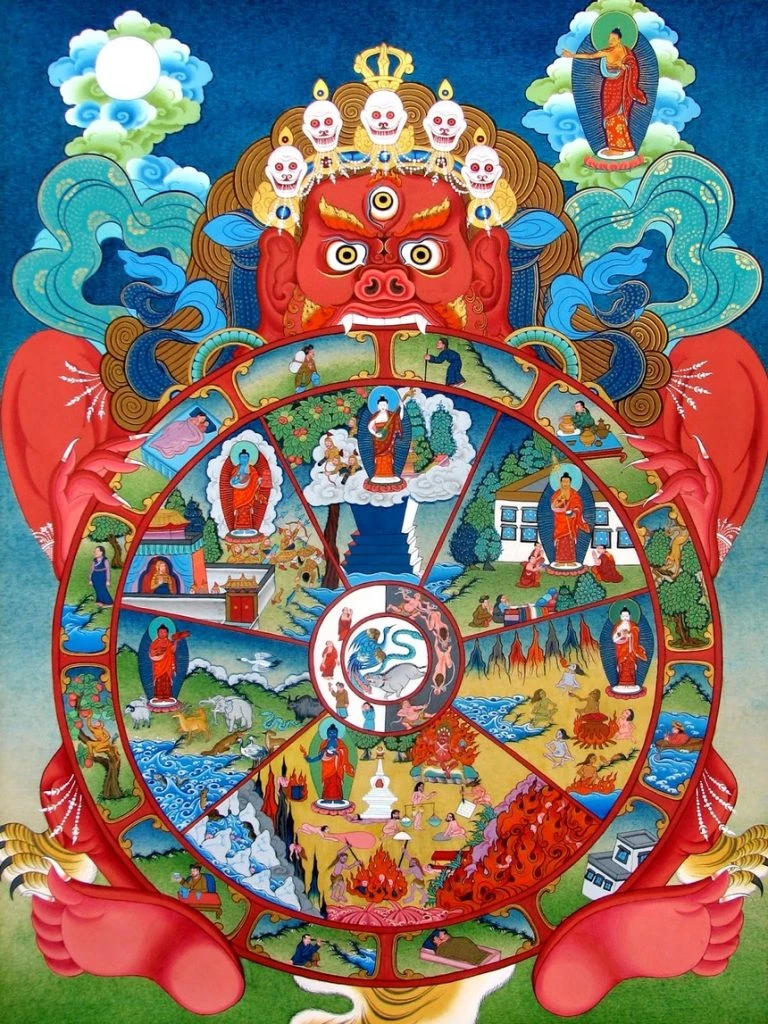
The price of a Thangka depends on size, subject, artist skill, materials, detail level, and whether real gold or mineral pigments are used.
A small student-level painting may cost much less, while a large master-quality Thangka can cost hundreds or thousands of dollars. Mandalas and multi-deity compositions are usually more expensive because they require extreme precision.
A general guide:
| Type | Approximate Price Range |
|---|---|
| Small student work | USD 30 to 100 |
| Medium handmade Thangka | USD 100 to 500 |
| High-quality artist work | USD 500 to 2,000+ |
| Master-level or commissioned work | USD 2,000+ |
Prices are only general estimates. Always compare quality, not only size. A small painting by a skilled artist can be more valuable than a large painting with poor detail.
Yes. Joining a Thangka painting class is one of the most meaningful cultural activities in Kathmandu. Many schools in Boudhanath, Bhaktapur, and Patan offer short courses for travelers.
A short workshop may last 3 to 6 hours and introduce basic drawing, symbolism, and coloring techniques. A longer course of 3 to 7 days allows you to understand the grid system, facial proportions, color layering, and gold application.
This is a beautiful activity for travelers who want a slower, more mindful experience after trekking. Sitting in a quiet studio, learning from a local artist, and painting a small sacred symbol can become one of the most memorable parts of your Nepal journey.
Once you buy a Thangka, handling it properly is very important. Do not fold it. Folding can damage the canvas and crack the paint.
For small and medium paintings, the safest method is to roll the canvas carefully and carry it in a strong tube. Ask the artist or shop to help you roll it correctly. The painted surface is often protected with soft paper before being placed inside a tube.
For large or framed paintings, use a reliable courier service. Keep your bill, artist certificate, and purchase details. This is especially important if the painting is expensive or looks old.
Nepal’s Department of Archaeology provides Curio Clearance Certificates to help control the illegal transfer and export of antiquities while allowing the export of handicrafts. This is important because art that appears antique may require official clearance before export.
Buying a Thangka is not only a shopping decision. It is also a cultural decision. A responsible purchase supports artists, families, students, and traditional schools that keep this sacred art alive.
Follow these tips:
At Gateway Adventure Treks, we believe travel should go beyond sightseeing. Nepal is not only about mountains, trekking trails, and adventure. It is also about people, stories, monasteries, rituals, festivals, and living traditions.
If you are interested in buying a real Thangka painting in Kathmandu, our team can help you visit reliable artist workshops, explore Boudhanath, Patan, and Bhaktapur, and connect with local cultural experts. This experience can be added before or after your trek, city tour, Buddhist monastery tour, or Nepal cultural journey.
Whether you want to buy a meaningful painting, join a short Thangka class, visit a Buddhist monastery, or understand the symbolism behind Himalayan art, Kathmandu offers a deeply rewarding cultural experience.
A real Thangka painting is not just something you hang on a wall. It carries the patience of the artist, the wisdom of Buddhist philosophy, and the spiritual atmosphere of the Himalayas. When chosen carefully and bought responsibly, it becomes a lifelong reminder of your journey through Nepal.
The best places to buy authentic Thangka paintings are Boudhanath, Patan, Bhaktapur, and selected trusted studios in Kathmandu. Avoid rushed purchases, learn the meaning of the artwork, and support real artists whenever possible.
When you take home a genuine Thangka, you are not only taking home a painting. You are carrying a piece of Nepal’s sacred artistic heritage.






© Copyright Gateway Adventure Treks and Expedition Pvt. Ltd., 2026 All Rights Reserved